
- October 9, 2024
Maze of Forums

The wrong path is paved with good intentions
It is not possible to give advice online through a forum, because you have to hear and look at the given problem in its context. Every piece of music is unique and will require different approach. It is a fact that different keys will have their typical cut points on different frequency locations, but even than the right solution will depend on the style and the actual situation of the track. The other problem is that the questioner may not be asking the question well in the first place, for example if one may use the term “enhancing” it could easilly be a general sense of volume, which engineers used to call “loudness”, that’s quite a difference as one refers to a processing and the other to the desired result. Unfortunately, misinformation spreads very often and very quickly on online platforms, which makes it even worse for those who want to learn.
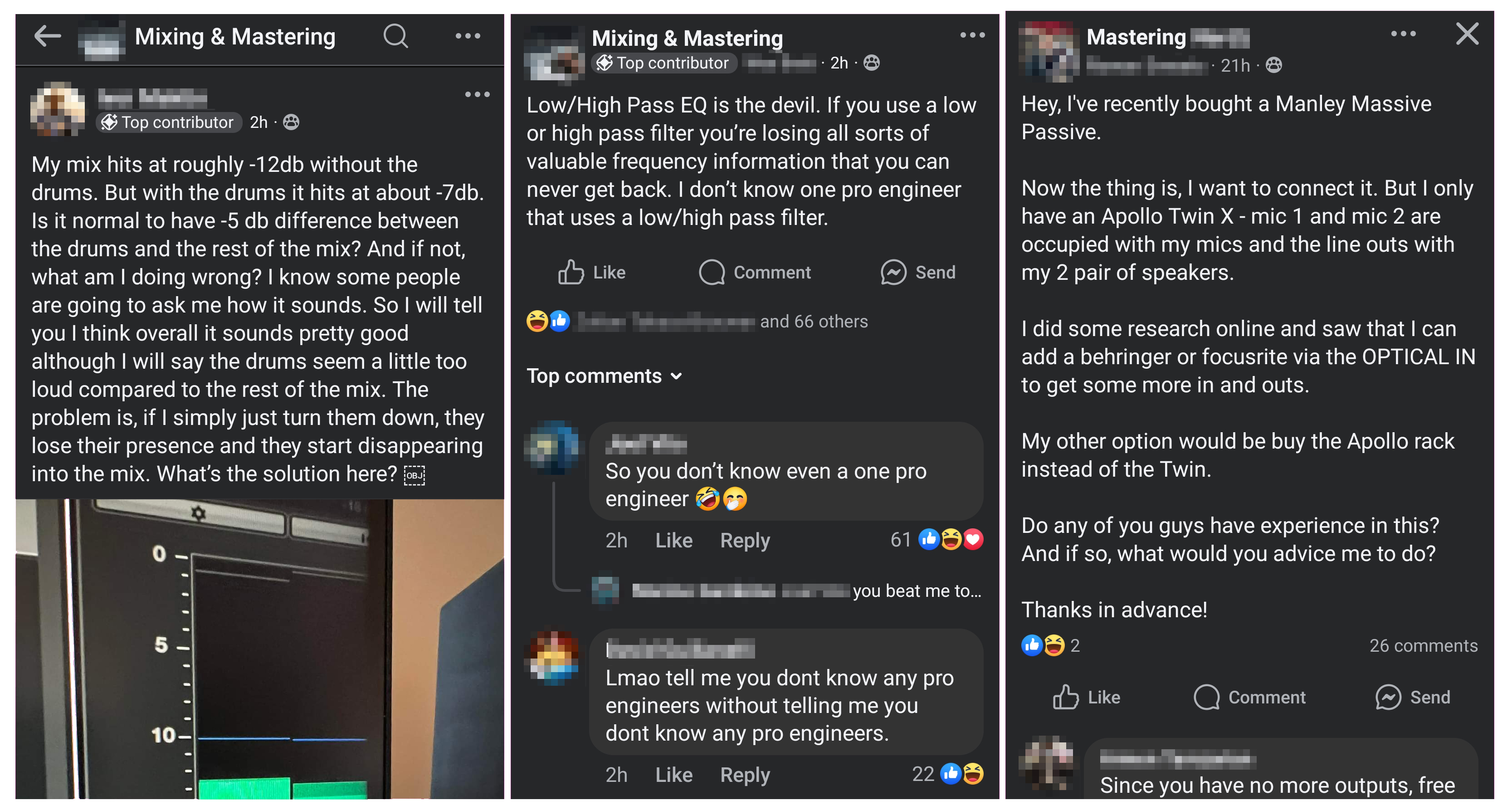
The following image shows a confident statement among innocent questions, but it is a huge mistake.
Anyway these types of questions drives the pros mad, that leads to disrespectful reactions. I mean even a beginner should know that a behringer and a massive passive is not in the same league.
Because of this it is much more difficult for the questioner because rather than receiving one correct answer a ton of replies will be thrown at a very fast pace. But if one were so lucky to have only a good one than it would still needed to be interpreted on it’s own and applied to the project. This already means extra steps and during these work processes one may make additional mistakes by not fully understanding the instructions or using them incorrectly. Such error possibilities can only be ruled out by the supervision of a specialist.
In reality this is not the case, as one will be in a much more disadvantageous situation, since receiving many answers to the question makes it harder as the quetioner will have to independently filter out from this mass of information what the correct answers might be.
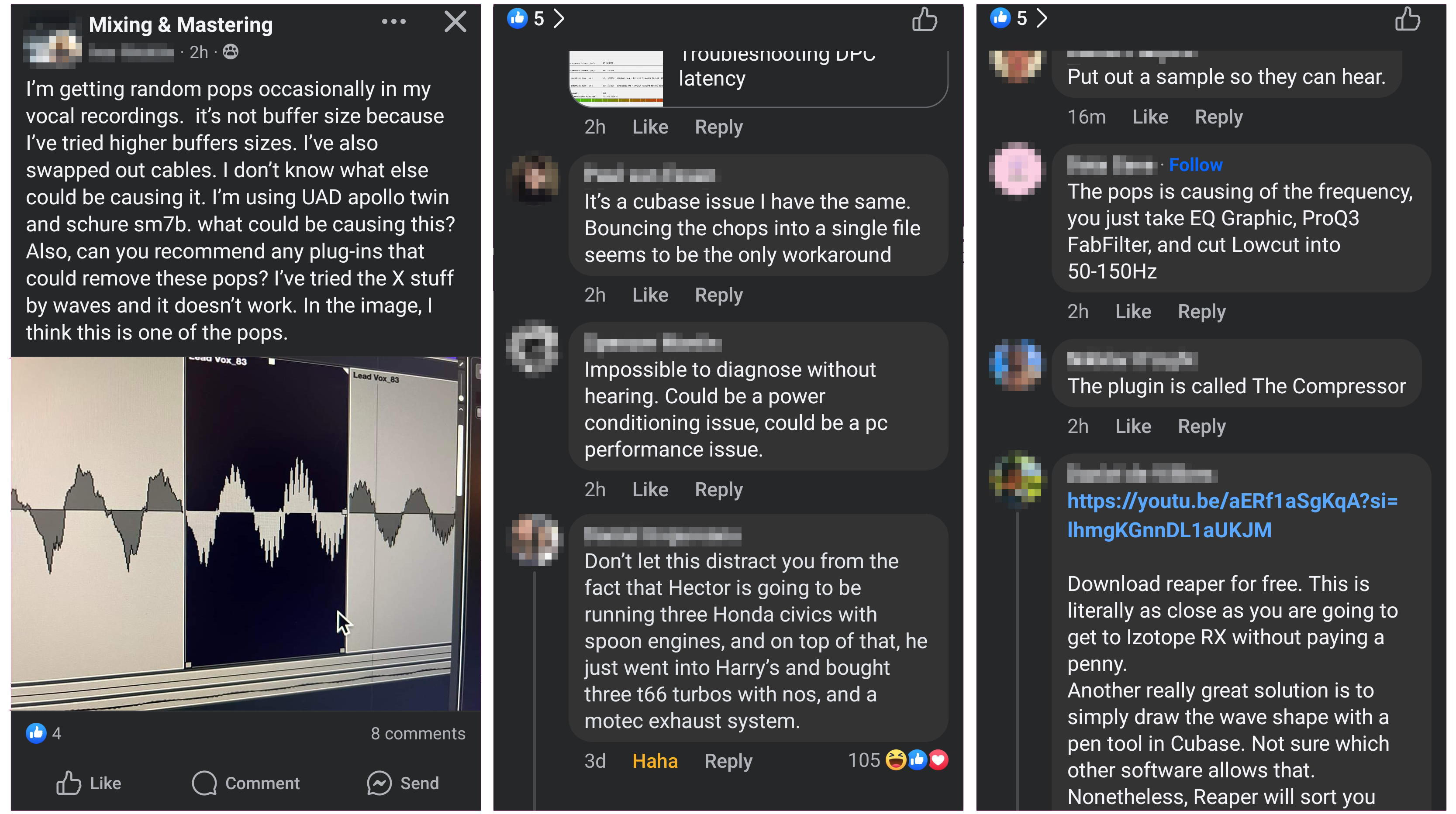
This is a prime example of asking a good question that gets almost wrong answers only. Do you know which one is the solution?
Many people usually solve this by simply trying all the suggestions and if one of them works, they happily move on. Now, the problem with this is that in such a case, there is no logically guided error-finding methodology and analytical way of thinking taught to the person who asked for help. Therefore, the next time a similar problem occurs, one will not recognize it, and as a result, will not be able to gain real knowledge. An even bigger problem is that this is not actually the goal of the questioner, as only a quick solution is what really needed. This phenomenon is quite common among young producers, but it is not a new trend as We alredy seen that in history. Beginner creators used to have preferred the quick solution instead of spending years on their studies. Of course, in our ever-accelerating world, this situation has only worsened and long-term persistent learning is becoming less and less attractive for young people who are still looking for instant solutions and for quick success breakdown.
Such and similar misconceptions and the debates of amateurs will provide many readers, inquirers and those who want to learn with wrong information and will lead to wrong conclusions that will bring bad results. To add to the problem, furher damage is caused by these faulty processes which will get tried in the production and the new errors will generate new questions, that lead to new advices and this way they will only sink even deeper into the forest of mistakes.
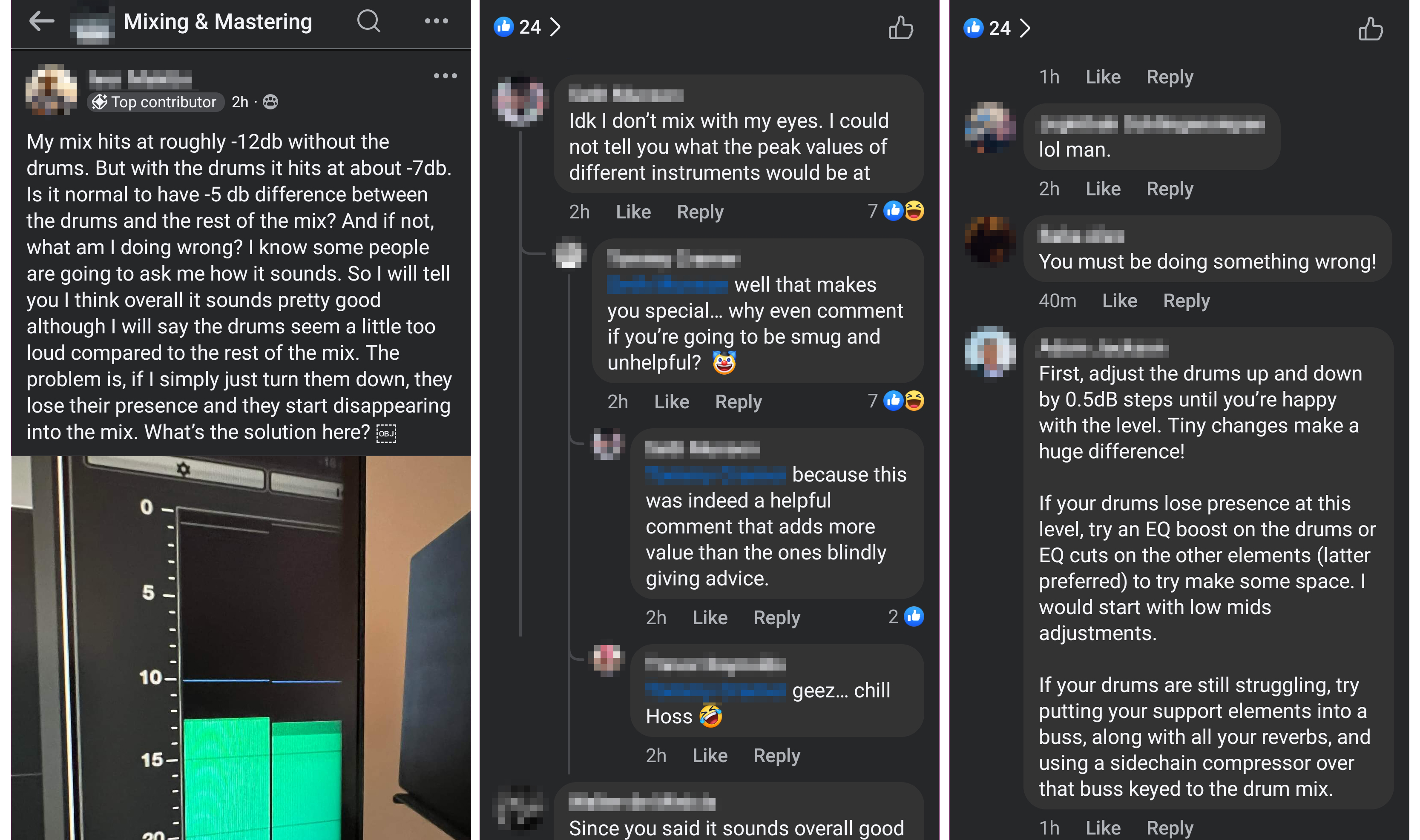
An innocent question leads to argument and the brilliant advice of making half dB changes. Well for starters API 550 equalisers have 2 dB gain steps because that is what We can hear as a noticeable change in sound. 1 dB may be heard by pros on a very good monitoring system but half…
To avoid such unnecessary and harmful circles, we created our consultation service, which offers both personal and online consultations. In the process, we examine the given music and analyze the problems within it, or provide a precise solution recipe for a specific problem you have raised. What’s more, in addition to presenting the solution, we also help you understand the necessary steps that will lead you to the right solution at other times. You know how the saying goes: Give a man a fish and you feed him for a day. Teach a man to fish and you feed him for a lifetime.
It is also important to talk about what information distorting factors can come into play during such an online consultation. One of our biggest enemies is room acoustics. This in itself can cause a lot of anomalies and headaches for a producer, because if one cannot adequately monitor the bass due to problems caused by standing waves in a small room and because of this the decision-making mechanism is significantly impaired, then unfortunately, no matter how hard we try to show with examples, in that listening environment one may not be able to to understand if the workspace is not suitable for the exact representation of the given set of information. Unfortunately, this phenomenon also occurs very often in the case of headphones, because there is a significant difference between different manufacturers and models in terms of tonal balance. Some have much more bass, while others have considerably less. If we work with headphones that have a lot of bass, our brain will automatically compensate for this and we will add less bass to the music, but if we listen to this on another listening system or with other headphones, we will be surprised to experience this error. This phenomenom is called the “mix translate factor”, and is one of the goals of the mixing and mastering process to maximize this parameter.
To end our journey in the world of forums here is a screen that will surely puts a smile on you face:
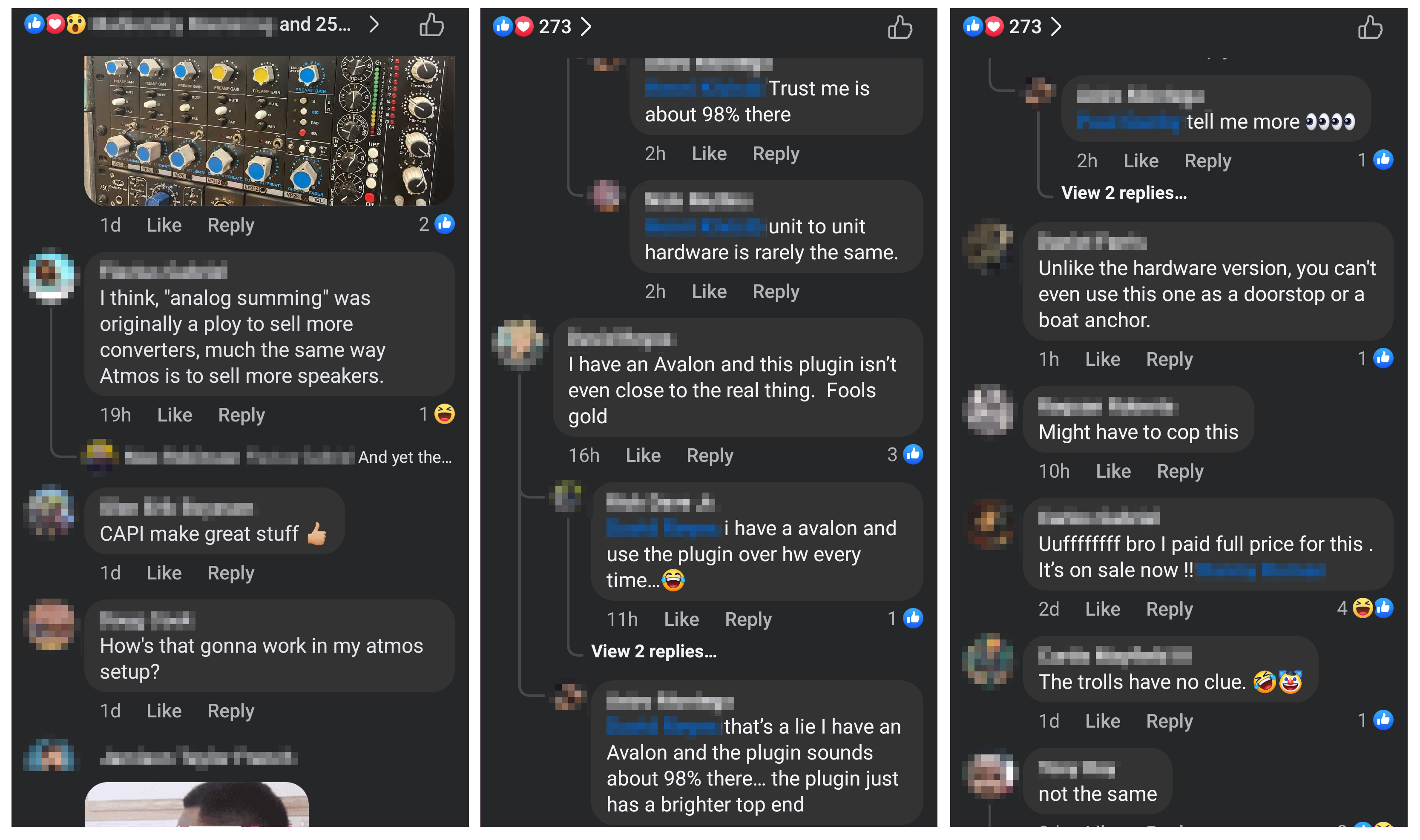
UAD ads act like troll magnets and We can always find some funny conversations in addition to the eternal debate of analog vs digital.
Be careful with online forums and don’t get angry. Also try not to spend too much time in them as it can be toxic. It is much more worth to practice the craft rather than just talkin about it.
With this thought, I’m turning back to my mastering desk.